What You'll Learn
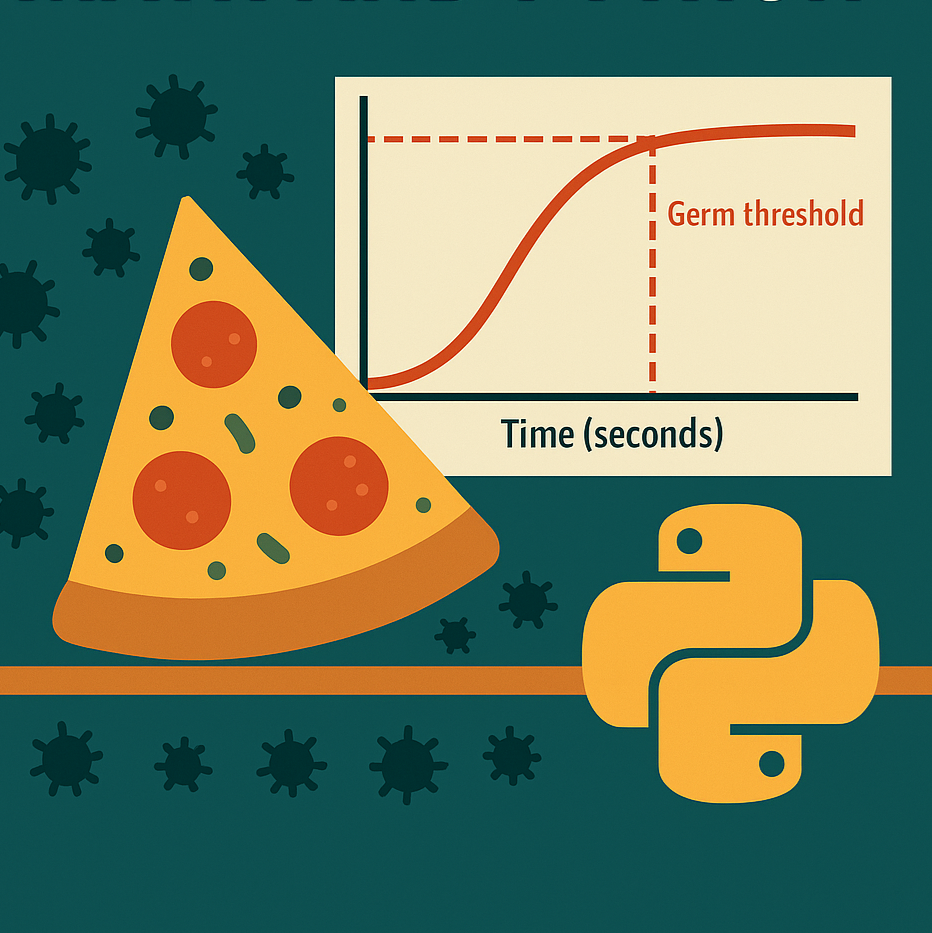
- Why germs begin transferring to food as soon as it touches a surface
- How moisture, contact area, and surface texture affect contamination
- Why germ transfer happens fastest during the first moments of contact
- How an exponential curve can model contamination over time
- How calculus reveals the changing rate of germ transfer
- How Python can estimate when contamination crosses a chosen threshold
What You'll Learn
- How to turn meeting choices into a mathematical optimization problem
- How time and mental energy can be modeled as separate constraints
- How a 0/1 knapsack model chooses the most valuable combination of meetings
- How Python and PuLP can solve a meeting schedule automatically
- How AI can scaffold optimization code when you give it the right mathematical structure
- How simulation and visualization can reveal which meetings are worth attending
What You'll Learn
- Why deeply nested validation logic becomes difficult to read and maintain
- How guard clauses improve control flow but can still create repetitive validation code
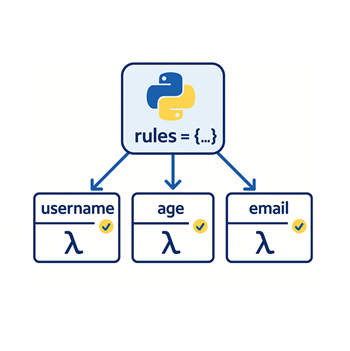
- What a dispatch table is and how Python dictionaries make the pattern easy to implement
- How lambda functions can pair validation rules with their corresponding error messages
- How a single loop can evaluate many validation rules without adding more control flow
- Why dispatch tables make validation code easier to extend, read, and maintain
![]()